

What Is Early Intervention and Why Is It So Important?
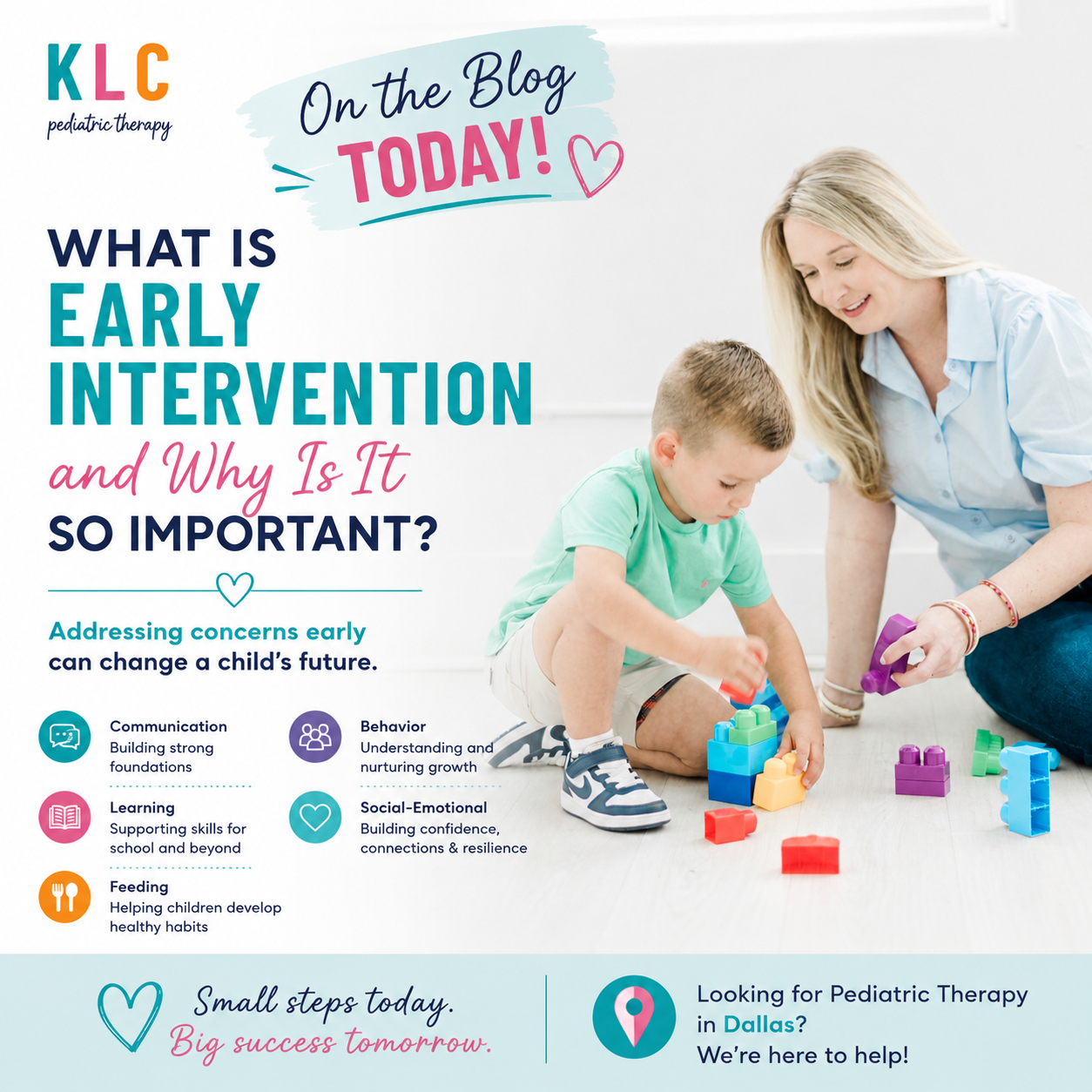
As parents, it's natural to wonder whether a child will eventually "grow out of" a developmental concern. Maybe your toddler isn't talking as much as other children their age, your preschooler struggles to interact with peers, or mealtimes have become a daily challenge.
Many children develop at their own pace, but sometimes delays or challenges are signs that additional support may be helpful. The good news is that when concerns are identified early, children often make significant progress with the right intervention.
That's why early intervention is so important.
What Is Early Intervention?
Early intervention refers to specialized services and support designed to help infants, toddlers, and young children who are experiencing developmental delays or challenges.
Depending on a child's needs, early intervention may include:
The goal is simple: provide support during the years when a child's brain is developing most rapidly and is most responsive to learning.
Why Early Intervention Matters
The first few years of life are a time of incredible growth. During this period, children are building the foundation for communication, movement, learning, social skills, and emotional development.
Because the brain is highly adaptable during early childhood, skills learned during these years can have a lasting impact.
When developmental concerns are addressed early, children often:
Learn new skills more quickly
Build stronger foundations for future learning
Gain confidence and independence
Experience greater success in school and social situations
Reduce the likelihood of larger challenges later on
Simply put, early intervention gives children the opportunity to develop the skills they need when their brains are most ready to learn.
Supporting Communication Development
One of the most common reasons families seek early intervention is concern about speech and language development.
Parents may notice that their child:
Isn't babbling or using words as expected
Has difficulty following directions
Struggles to communicate wants and needs
Has trouble understanding language
Isn't combining words into phrases
Communication is the foundation for learning, relationships, and daily life. Early speech and language therapy can help children develop the skills they need to express themselves and connect with others.
Building Strong Foundations for Learning
Long before children learn to read and write, they develop important skills that support future academic success.
These foundational skills include:
Attention and listening
Language development
Problem-solving
Memory
Early literacy skills
When children struggle in these areas, early support can help strengthen those skills before academic challenges emerge.
Understanding Behavior as Communication
Young children don't always have the words to explain what they're feeling or what they need.
As a result, frustration, tantrums, aggression, or difficulty with transitions are often forms of communication.
Behavioral challenges can sometimes be linked to:
Communication delays
Sensory processing differences
Emotional regulation difficulties
Developmental challenges
Early intervention helps identify the underlying cause of behaviors and teaches children healthier ways to communicate and cope.
Addressing Feeding Challenges Early
Feeding difficulties can be stressful for both children and parents.
Some common concerns include:
Limited food variety
Difficulty chewing
Trouble transitioning to new textures
Gagging or choking concerns
Mealtime stress
Oral-motor challenges
Early feeding therapy can help children develop safe and successful eating skills while making mealtimes more enjoyable for the entire family.
Supporting Social and Emotional Growth
Social and emotional skills play a major role in a child's success both in and out of the classroom.
Some children may need support with:
Playing with peers
Making eye contact
Managing frustration
Understanding emotions
Coping with changes and transitions
Following social routines
Early intervention can help children build confidence, strengthen relationships, and develop the skills needed to navigate social situations successfully.
What Is a Developmental Delay?
A developmental delay occurs when a child is not meeting expected milestones in one or more areas of development.
These areas may include:
Communication
Speech development
Language skills
Understanding directions
Motor Skills
Crawling
Walking
Balance and coordination
Fine motor skills
Cognitive Development
Problem-solving
Learning
Attention
Social-Emotional Development
Relationships
Emotional regulation
Play skills
Adaptive Skills
Feeding
Dressing
Daily routines
Not every delay indicates a long-term concern, but an evaluation can provide valuable answers and guidance.
Why "Wait and See" Isn't Always the Best Approach
Many parents hear comments like:
"He's just a late talker."
"She'll catch up eventually."
"Let's give it another year."
While some children do catch up on their own, waiting can sometimes delay support during a critical period of development.
Research consistently shows that children who receive support early often experience:
Stronger communication skills
Better school readiness
Improved social development
Greater independence
Increased confidence
Seeking an evaluation doesn't mean something is wrong with your child. It simply provides information and helps determine whether support may be beneficial.
When Should You Seek an Evaluation?
Trust your instincts.
You know your child better than anyone else.
Consider seeking an evaluation if:
Your child isn't meeting developmental milestones
Communication skills seem delayed
Feeding challenges are affecting daily life
Teachers or caregivers have expressed concerns
Social interactions are difficult
Behaviors are interfering with family routines or learning
You do not need a diagnosis to ask questions or seek guidance.
Small Steps Today Can Lead to Big Success Tomorrow
Early intervention isn't about labeling children or focusing on limitations. It's about identifying strengths, addressing challenges, and providing support during a time when it can make the biggest difference.
Every child deserves the opportunity to reach their full potential, and early intervention helps create that opportunity.
How KLC Pediatric Therapy Can Help
At KLC Pediatric Therapy, we provide individualized services designed to support children with developmental delays and developmental concerns. Our team offers speech therapy, feeding therapy, occupational therapy, physical therapy, dyslexia therapy, counseling, and other early intervention services tailored to each child's unique needs.
If you have concerns about your child's development, we're here to help guide you through the next steps.
Contact KLC Pediatric Therapy today to schedule a consultation and learn how early intervention can support your child's growth, confidence, and long-term success.